
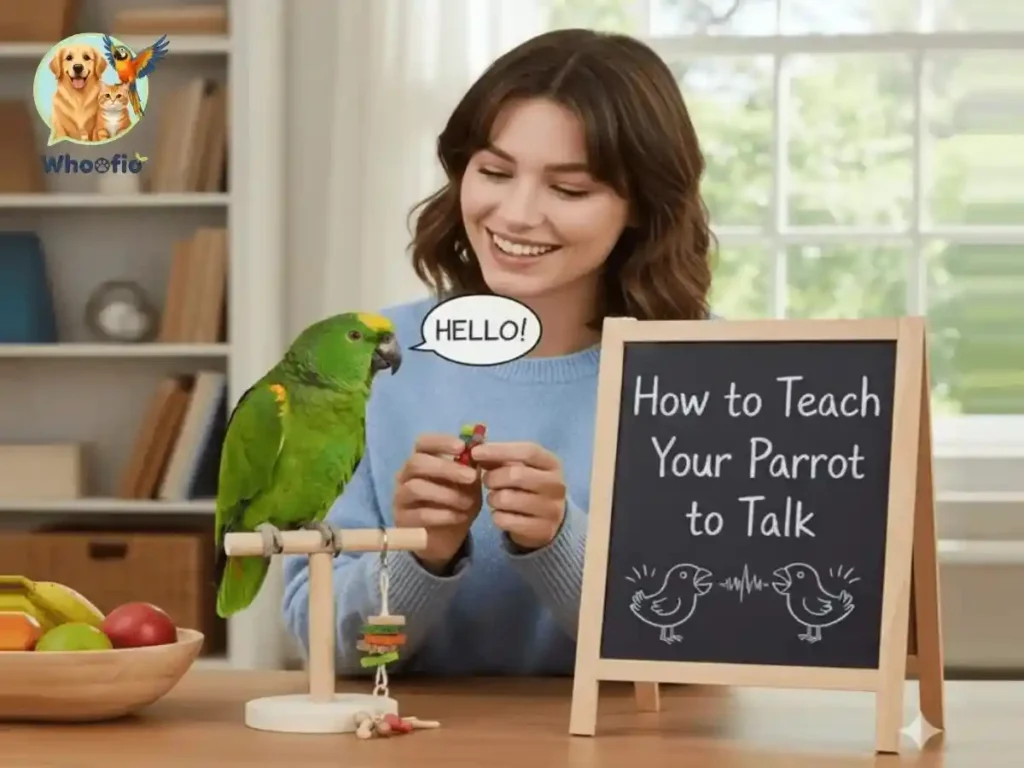
Parrots are some of the most intelligent, expressive, and fascinating pets in the world. Their curious personalities and playful behaviors already make them lovable — but their ability to mimic human speech is what truly sets them apart. Hearing your parrot say “Hello!” or repeat your name can instantly fill your home with joy and deepen the bond you share. If you’ve ever wondered how to teach your parrot to talk, you’re in the right place. Teaching a parrot to speak isn’t a quick trick; it’s a gradual process built on trust, repetition, and understanding how parrots learn. This complete guide walks you through everything you need: why parrots mimic, which species talk best, step-by-step training, common challenges, advanced tips, and more.
Why Do Parrots Talk?
Parrots don’t talk because they understand language like humans. Instead, their speech comes from mimicry — a natural communication skill they use in the wild. In their flocks, parrots use sounds to communicate danger, emotions, and social messages. When living with humans, your voice becomes their “flock language,” so they try to copy it to interact with you. They mimic sounds they hear repeatedly, and certain tones or rhythms catch their attention more than others. Highly intelligent species like African Greys and Amazons have stronger vocal-learning abilities, which is why they excel at talking.
Step-by-Step Guide on How to Teach Your Parrot to Talk
Step 1: Create a Social Environment
A parrot’s learning ability depends heavily on its environment. They learn best when they hear human voices regularly, so placing them in a lively room is essential. A living room or family area is ideal because it exposes your bird to natural conversations, tones, and rhythms throughout the day. Avoid isolating your parrot in a quiet room, as this reduces speech exposure. Extreme noise, temperature shifts, and stress also affect learning ability. A calm but social space helps your parrot feel safe and interested in sounds. When your bird feels like part of the family, it becomes more eager to mimic the sounds it hears.
An ideal environment includes:
- A room with daily human interaction
- Soft background sounds
- Stable temperature
- No fumes or smoke
- No loud noises
Step 2: Bond With Your Parrot
A strong bond is the base of all talking success. A parrot that trusts you is more willing to mimic your words. Spend time sitting near your bird, talking softly, and giving gentle interaction. Handle your parrot daily if possible to build comfort. Birds that feel secure become more vocal. A daily routine helps the bird understand your behavior and feel connected. A bonded parrot learns because it wants to communicate with you.
Ways to build trust:
- Talk gently every day
- Offer treats
- Use a calm voice
- Let your parrot sit near you
- Avoid sudden movements
Step 3: Start With Simple Words
Start with short, easy words your parrot can catch. Repetition is key; the more your bird hears a word, the faster it will mimic it. Words said in a high-pitched, emotional tone are easier to copy. Use the word naturally — say “Hello” when entering the room or “Up” when asking your bird to step on your hand. Linking actions with words helps understanding. Avoid teaching too many words at once.
Simple starter words:
- Hello
- Bye-bye
- Up
- Good bird
- Your parrot’s name
Step 4: Use Positive Reinforcement
Positive reinforcement is one of the best training tools. Each time your parrot tries to mimic a word, reward it immediately. This helps the bird understand that talking leads to something good. Treats, praise, and head scratches work well. Avoid punishment if your bird doesn’t respond — it can stop progress. Celebrate small steps.
Best rewards:
- Small treats
- Verbal praise
- Happy tone
- Short playtime
Step 5: Speak Clearly and Enthusiastically
Parrots mimic the sound you make, not the meaning, so clarity matters. If you mumble, your parrot will repeat unclear sounds. Use a bright, enthusiastic voice that the bird can catch easily. High-pitched tones work well. Speak slowly and at the same pace each time. The more expressive your voice, the more your bird listens.
Make your voice:
- Clear
- Slow
- Rhythmic
- Cheerful
- High-pitched
Step 6: Teach Words Through Daily Activities
Linking words to real actions makes learning easier. When you say “Banana” while offering a banana, your parrot understands the sound connects to the object. Feeding, greeting, and bedtime are great training times. Repeated association builds vocabulary. Over time, your bird may say words on its own during activities.
Use words during:
- Feeding
- Playtime
- Grooming
- Greetings
- Bedtime
Step 7: Introduce Phrases and Sentences
Once your parrot learns simple words, start combining them. Begin with short phrases like “Hello baby” or “Good bird.” Speak slowly and keep the same tone. Add new words slowly. Some parrots enjoy rhythm, so singing helps. Reward attempts even if the bird says only part of the phrase.
Easy beginner phrases:
- Hello Coco
- Good morning
- Come here
- Good night
Step 8: Use Audio Tools When You’re Away
Your parrot can learn even when you are away. Audio recordings help reinforce vocabulary. You can record your own voice or use talking toys. Play recordings at low volume for short periods so your bird doesn’t get overstimulated. These tools help busy owners, but real interaction is still the best.
Helpful audio tools:
- Mimic Me Recorders
- Talking toys
- Voice messages
- Short recorded phrases
Step 9: Encourage Social Interaction
Parrots are social, and they learn best as part of a group. Let multiple family members help with training. Everyone should use the same words and tone so the bird gets clear patterns. Make interactions fun and positive. This boosts learning and strengthens the bond with everyone.
Step 10: Be Patient and Consistent
Patience is important. Parrots learn at different speeds. Short, frequent sessions work better than long ones. Avoid pushing your bird. Celebrate every small improvement. Staying patient builds confidence and keeps training enjoyable.
Common Challenges and How to Overcome Them
Even with the best techniques, you might encounter a few hurdles along the way.
Shy or Reluctant Talkers:
Some parrots are naturally shy and may take longer to start talking. To help, create a calm and quiet environment and use gentle encouragement. One-on-one sessions can also help build trust.
Mispronunciation:
It’s normal for parrots to initially mispronounce words. Be patient and consistent. Repeat words clearly and slowly, and reward clear attempts. Over time, their pronunciation will improve.
Unwanted Words:
Parrots mimic everything, including words you might not want them to learn. Avoid using negative or inappropriate language around your bird. Instead, replace unwanted words with positive ones and reinforce those.
Limited Vocabulary:
Not all parrots will become fluent speakers. Some may only learn a few words. Celebrate these achievements and focus on building a strong bond through other forms of interaction and enrichment.
Advanced Tips for Expert Parrot Trainers
Once your parrot has mastered basic words, you can take training to the next level.
- Teach object names: Hold an object and say its name repeatedly, rewarding your parrot when it mimics the word.
- Introduce songs and phrases: Parrots love melody, so singing phrases can help reinforce learning.
- Combine gestures with words: This helps in reinforcing memory and understanding.
- Keep a training journal: Track progress and note what techniques work best for your parrot.
- Rotate training methods: Keep sessions engaging and avoid boredom by changing your approach.
These advanced strategies will keep your parrot mentally stimulated and eager to learn.
Conclusion
Teaching your parrot to talk is a fun and rewarding journey that brings you closer to your bird. With patience, consistency, and the right methods, your parrot can build a cute vocabulary and enjoy meaningful interactions. Remember, every bird is different, and progress varies. Celebrate each win, trust the process, and enjoy the time you spend together.
With the right approach, you’ll master how to teach your parrot to talk, and your feathered friend will soon become a joyful little chatterbox!