
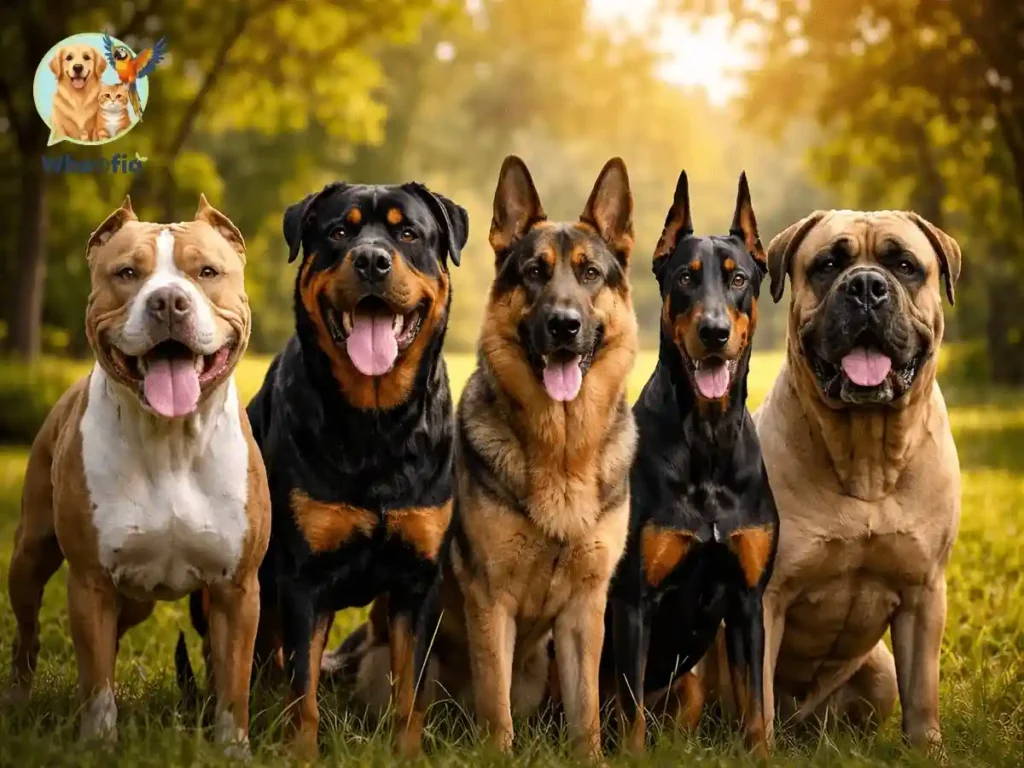
The phrase Dangerous Dog Breeds refers to dog breeds that require higher levels of control and management due to their physical strength, guarding instincts, or territorial behavior. These breeds are often selected for working roles such as protection, security, law enforcement, and property guarding because of their intelligence, alertness, and ability to respond to threats. However, classification as a dangerous breed does not mean that all individuals are aggressive. Behavior is influenced by training, socialization, environment, and owner responsibility.
This article provides objective and factual information on five dog breeds commonly labeled as dangerous, focusing on their historical background, physical characteristics, typical behavior patterns, and the responsibilities involved in owning and managing them safely.
Pit Bull Terriers
History and Reputation
Pit Bull Terriers were first bred in the 19th century for bull-baiting and later used as farm dogs. Over time, they became linked with illegal dog fighting, which damaged their public image. Media reports often focus on Pit Bull attacks, increasing fear and misunderstanding about the breed.
However, many animal experts agree that irresponsible ownership, abuse, and lack of training are the main causes of aggressive behavior in Pit Bulls—not the breed itself.
Special Characteristics
Physical Traits:
Strong jaws
Muscular body
High energy levels
Behavior:
Confident and determined
Very loyal to owners
Temperament:
Loving with family
Can become aggressive if untrained
Ownership Considerations
With early socialization and consistent training, Pit Bulls can be obedient, affectionate, and even work as therapy or rescue dogs. Due to their strength and energy, they are better suited for experienced dog owners and may not be ideal for first-time owners or families with very young children.
Rottweilers
History and Reputation
Rottweilers date back to the Roman Empire, where they were used to herd cattle and guard property. Their strength and guarding instincts made them excellent working dogs. However, without proper training, these same traits can lead to aggressive or dominant behavior.
Special Characteristics
Physical Traits:
Large and muscular body
Powerful bite force
Behavior:
Protective and confident
Deeply loyal
Temperament:
Calm with family
Suspicious of strangers
Ownership Considerations
Rottweilers need firm leadership, early training, and regular social interaction. They perform well as guard dogs, police dogs, and service animals. Because of their protective nature and strength, they are best suited for owners who understand dog behavior and training.
German Shepherds
History and Reputation
German Shepherds were developed in Germany in the late 19th century for herding and guarding sheep. Their intelligence and versatility made them popular in police, military, and security roles. Their strong protective instincts can sometimes be mistaken for aggression.
Special Characteristics
Physical Traits:
Strong and athletic
High endurance
Behavior:
Intelligent and obedient
Highly trainable
Temperament:
Loyal and alert
Cautious around strangers
Ownership Considerations
German Shepherds need daily exercise and mental stimulation. Without it, they may develop behavioral problems. With proper training, they can be excellent family pets, but their energy level and guarding instincts make them more suitable for experienced owners.
Doberman Pinschers
History and Reputation
Doberman Pinschers were developed in Germany by Karl Friedrich Louis Dobermann as personal protection dogs. Their speed, intelligence, and alertness earned them a reputation as effective guard dogs.
Special Characteristics
Physical Traits:
Sleek, muscular build
Fast and agile
Behavior:
Fearless and alert
Strong bond with owners
Temperament:
Intelligent and responsive
Can be dominant if untrained
Ownership Considerations
Dobermans need consistent training and socialization from an early age. When raised properly, they are affectionate, loyal, and obedient. Due to their protective instincts, they are better suited for owners who can provide structured leadership.
Bullmastiffs
History and Reputation
Bullmastiffs were developed in 19th-century England to guard estates from poachers. Their size and quiet guarding style made them effective protectors. However, their strength can become dangerous if they are not properly trained.
Special Characteristics
Physical Traits:
Large, powerful body
Strong muscular build
Behavior:
Calm and courageous
Naturally protective
Temperament:
Gentle with family
Reserved or aggressive toward strangers
Ownership Considerations
Bullmastiffs require early socialization and firm training. Despite their calm nature indoors, their size alone can pose risks. They are not recommended for inexperienced owners or homes without proper supervision.
Tips for Handling Potentially Dangerous Dog Breeds
Owning a powerful dog requires dedication and responsibility. Here are some expert-backed tips:
Early Socialization: Expose dogs to people, places, and animals early
Consistent Training: Use positive reinforcement and routine training
Supervision: Always supervise interactions with children
Professional Help: Work with certified trainers if needed
Responsibilities of Owning a Powerful Dog Breed
Importance of Responsible Ownership
Commitment: These dogs require time, patience, and money
Education: Understanding breed traits prevents behavior issues
Community Safety: Well-trained dogs create safer neighborhoods
Legal Considerations
Breed-Specific Laws: Some areas restrict certain breeds
Owner Liability: Owners are legally responsible for their dog’s actions
Frequently Asked Questions (FAQs)
Can These Dog Breeds Be Kept as Family Pets?
Yes, these breeds can be family pets if they are properly trained, socialized, and supervised. They are best suited for families with prior dog ownership experience.
Are These Dogs Dangerous by Nature?
No. Aggression usually results from poor training, neglect, abuse, or lack of socialization—not the breed itself.
Are These Breeds Safe Around Children?
They can be safe, but supervision is essential. Their size and strength increase the risk of accidental injury.
Are These Dogs Suitable for First-Time Owners?
Generally, no. These breeds require experienced handling and consistent training.
Does Training Reduce Aggression?
Yes. Proper training and mental stimulation significantly reduce aggressive behavior.
Are There Legal Restrictions on These Breeds?
Yes, some regions have breed-specific laws. Always check local regulations before owning one.
Final Conclusion
While these breeds are often labeled as Dangerous Dog Breeds, their reputation is largely influenced by human handling rather than genetics alone. With proper training, early socialization, and responsible ownership, even the strongest and most protective dogs can be loyal, gentle, and loving family members. Understanding each breed’s needs, energy levels, and temperament is key to building a safe and harmonious home. By committing to responsible care, you can turn these powerful breeds into trustworthy companions, proving that “dangerous” does not mean unmanageable—it means prepared, educated owners are essential.