
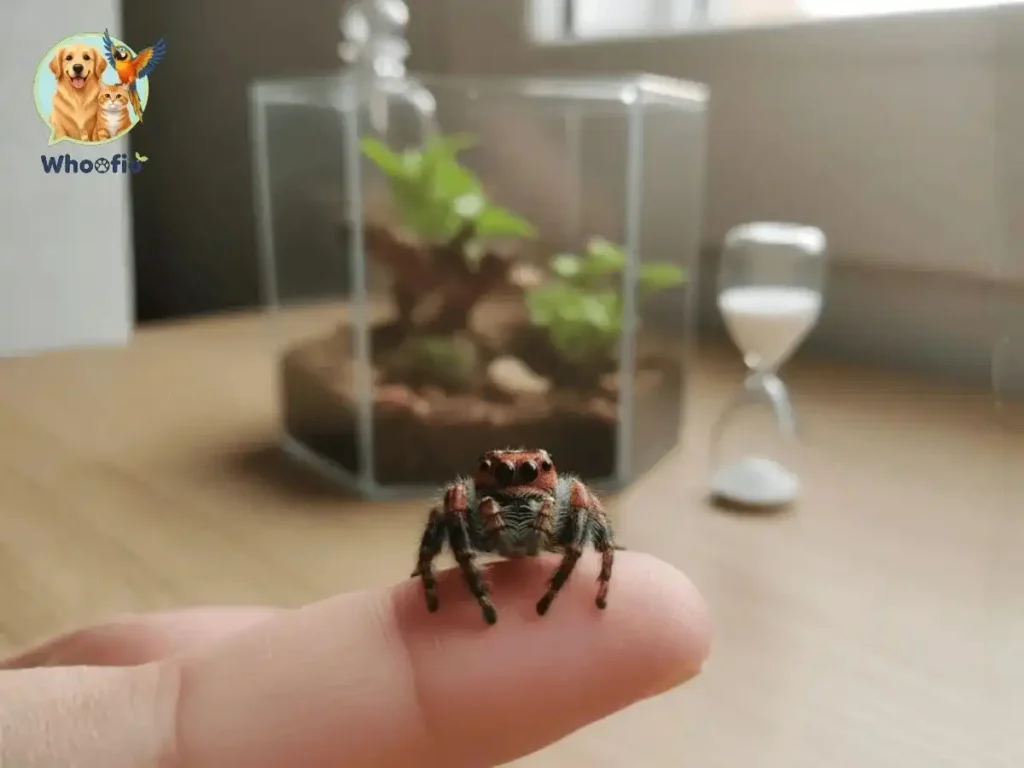
If you’ve ever watched a jumping spider up close, then you already know one thing: these tiny creatures are full of personality.
They’re curious, expressive, ridiculously cute — and yes — surprisingly easy to care for. Because of this, more and more pet lovers are now buying pet jumping spiders for their homes. But one question always pops up:
How long do pet jumping spiders live?
Well, today, you’ll get a complete, beginner-friendly, step-by-step, and SEO-focused guide that not only explains their lifespan…
…but also tells you how to increase it, what affects it, and why getting the right habitat products is crucial.
Let’s dive in!
What Is the Average Lifespan of a Pet Jumping Spider?
On average, a jumping spider’s lifespan depends on its species, gender, and environment.
However, most pet hobbyists stick to a few common species like Phidippus regius, Phidippus audax, and Phidippus johnsoni.
Generally:
- Male jumping spiders live 6–12 months
- Female jumping spiders live 1–3 years
- Some females can live slightly longer with perfect care
So yes — if you want a spider that lives longer, always choose a female.
But wait. There’s something important…
Many new owners don’t realize that the captivity lifespan of these spiders is always longer than their wild lifespan, simply because:
- They get consistent food
- They stay protected from predators
- They have stable temperatures
- They don’t experience stress from harsh environments
So, if you set up the right habitat for your jumping spider, you can help it live its full lifespan easily.
Lifespan by Popular Species of Pet Jumping Spiders
To give you a clearer picture, here’s a breakdown of the most common pet species:
1. Phidippus Regius (Regal Jumping Spider)
Female lifespan: 1.5–3 years
Male lifespan: 6–12 months
Learn more
2. Phidippus Audax (Bold Jumping Spider)
Female lifespan: 1–2 years
Male lifespan: 6–10 months
Learn more
3. Phidippus Johnsoni
Female lifespan: 1–2 years
Male lifespan: around 1 year
Learn more
4. Hyllus Diardi
Female lifespan: 2–3 years
Male lifespan: 1 year
Learn more
If you want a jumping spider with the longest possible lifespan, go for:
✔ Female Regal Jumping Spider
✔ Female Hyllus species
Factors That Affect How Long Your Jumping Spider Lives
Now let’s talk about the real deal.
Your spider’s lifespan depends heavily on… YOU.
Yes, your care routine, habitat setup, and feeding schedule all shape its life quality.
Below are the biggest factors — explained in simple language.
1. Proper Enclosure & Space
Your spider needs a safe, comfortable home. A poor habitat is the #1 reason pet spiders die early.
Use a container that offers:
- Good ventilation
- Safe climbing space
- Soft substrate
- Anchor points for webs
If you don’t already own a jumping spider enclosure, consider buying a professional spider habitat kit — it dramatically increases the lifespan of your pet by providing the perfect climate.
Example: A jumping spider enclosure like this one → (Your monetizable product link can be inserted on your blog).
2. Humidity & Temperature Levels
According to spider care guidelines, most jumping spiders thrive in:
- Temperature: 24–28°C
- Humidity: 50–70%
Too much dryness causes dehydration.
Too much humidity causes mold (which can kill your spider fast).
Using a mini hygrometer inside the enclosure can easily help you maintain proper humidity.
3. Diet & Feeding Frequency
Jumping spiders LOVE live food — and they need it to stay healthy.
Some suitable options include:
- Fruit flies
- Small crickets
- Mealworms
- Roaches (small species only)
A weak diet = weak lifespan.
4. Gender of the Spider
As mentioned, females live much longer, because:
- They grow larger
- They molt more efficiently
- They have stronger energy reserves
If longevity matters to you → always choose a female jumping spider.
5. Molting Success
Molting is one of the most delicate phases of a spider’s life.
Molting is how your spider grows, and a failed molt can cause permanent damage or death.
You can help by:
- Keeping humidity slightly higher during molts
- Avoiding disturbance
- Removing large prey items before molting
6. Stress Levels
Stress shortens lifespan in ANY animal — even tiny spiders.
Avoid:
- Loud vibrations
- Shaking the enclosure
- Over-handling
- Strong lights constantly pointed at them
Calm spiders = long-living spiders.
How to Increase the Lifespan of Your Jumping Spider (Step-by-Step)
If you want your spider to live its maximum lifespan, follow this quick guide.
Step-by-Step Care Guide for Longer Lifespan
Step 1: Choose the Right Species
Pick a hardy species like:
- Phidippus regius
- Hyllus diardi
Females last longer — so choose a female.
Step 2: Set Up the Perfect Habitat
Your enclosure should include:
✔ Proper ventilation
Use mesh lids or side vents.
✔ Vertical space
Jumping spiders love climbing.
✔ Substrate
Use coco fiber substrate for moisture control.
✔ Decor
Give them:
- Fake leaves
- Cork bark
- Sticks
- Hiding spots
This increases comfort and reduces stress.
Having a ready-made jumping spider enclosure kit makes this step far easier — and increases survival rate.
Step 3: Maintain Moisture & Temperature
Keep:
- Humidity between 50–70%
- Temperature around 24–28°C
Use a misting bottle to lightly spray the enclosure 2–3 times a week.
Step 4: Feed High-Quality Live Food
Offer food every 2–3 days.
Variety keeps your spider healthier and boosts its immune system.
Step 5: Keep the Enclosure Clean
Remove dead insects, clean corners, and replace substrate every few weeks to avoid mites or mold.
A clean enclosure = longer lifespan.
Step 6: Avoid Handling Too Much
Jumping spiders can be handled — but gently.
Still, handling too often causes stress.
Limit handling to short, gentle sessions once in a while.
Signs Your Jumping Spider Is Aging
As spiders grow older, you’ll notice:
- Slower movements
- Less jumping
- Reduced hunting
- More sleeping
- Faded colors
- Smaller appetite
This is normal — especially in the last few months of their life.
However, with good care, you can make this stage comfortable.
Why Buying the Right Products Helps Increase Lifespan
Here’s the truth:
A well-set habitat can DOUBLE the lifespan of a pet jumping spider.
Cheap containers—no airflow—no humidity control—no climbing spots?
This leads to:
❌ early death
❌ failed molts
❌ stress
❌ reduced appetite
So, investing in products like:
- A proper jumping spider enclosure
- A humidity gauge
- A safe substrate
- High-quality live feeder insects
- A spray bottle for misting
…can keep your spider healthy, happy, and alive for years instead of months