
Bringing a baby parrot into your home is an exciting experience. These vibrant and intelligent birds grow quickly, and their diet plays a crucial role in their health, development, and long-term wellbeing. But what do baby parrots eat? And how can you ensure they get all the nutrients they need to grow into strong, healthy adults?
In this comprehensive guide, we’ll cover everything from hand-feeding baby parrots, safe fruits and vegetables, protein sources, supplements, feeding schedules, and diet plans. By understanding the nutritional needs of your chick, you can ensure they thrive in captivity while developing healthy eating habits that will last a lifetime.
Nutritional Needs of Baby Parrots
Baby parrots have specific nutritional requirements that differ from adult parrots. A balanced diet ensures healthy feather development, strong bones, and proper organ function.
Some key nutrients include:
Protein: Essential for muscle and tissue growth. Baby parrots need protein-rich foods like legumes, sprouted seeds, and occasional animal protein.
Calcium and Vitamin D: Critical for bone formation and healthy beaks. Calcium works hand-in-hand with vitamin D, which is synthesized when parrots get sunlight or included in their diet.
Vitamins A, B, and C: Support feather quality, vision, and overall immunity. Vitamin B6 and B12 are particularly important for digestive health and stress management.
Water: Hydration is crucial. Baby parrots should have access to fresh, clean water throughout the day to aid digestion and overall health.
Tip: Nutritional balance during early development is critical for parrot chicks. A deficiency in any major nutrient can lead to slow growth or health issues.
How Baby Parrots Are Fed in the Wild
In the wild, baby parrots rely on their parents for nutrition. Parent birds regurgitate a mix of fruits, seeds, insects, and nectar directly into the chick’s beak. This natural diet is nutrient-rich, providing everything a growing parrot needs.
Understanding this natural feeding behavior helps us replicate a similar diet in captivity, ensuring baby parrots get a balanced intake of vitamins, minerals, and protein.
Observation Tip: Watch wild parrot videos to understand the diversity in natural feeding habits. It will help you introduce a varied diet to captive chicks.
Hand-Feeding Baby Parrots
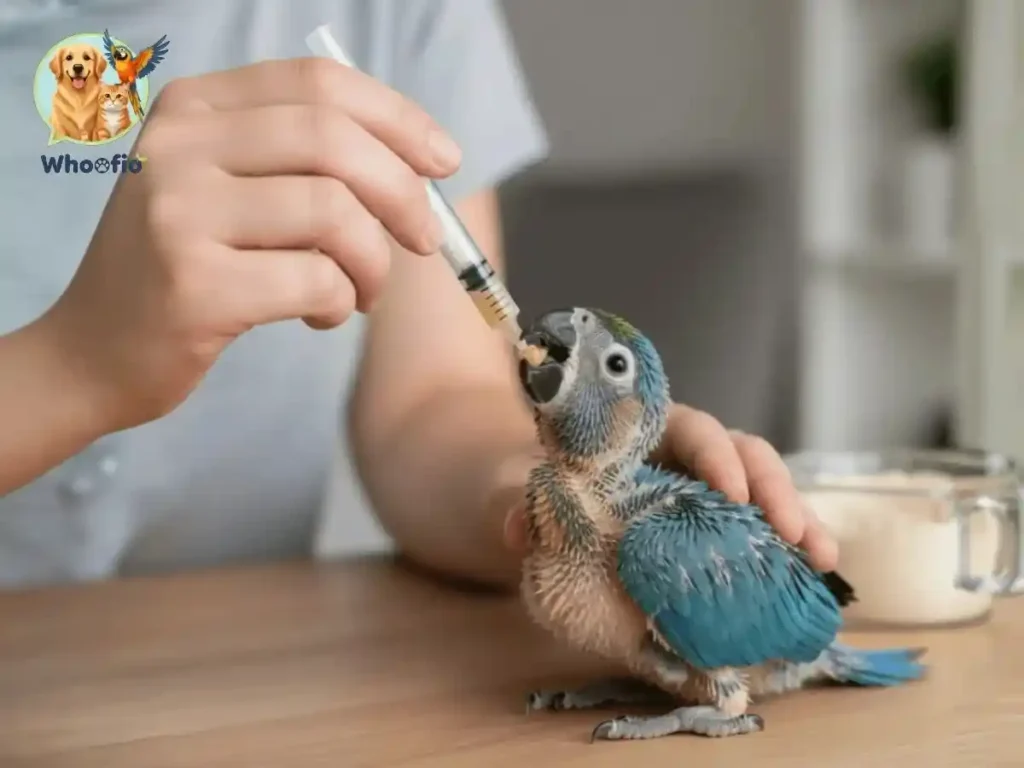
Sometimes, hand-feeding becomes necessary if parents reject the chick or if you are raising a rescued parrot. Here’s what you need to know:
Use a Store-Bought Baby Parrot Formula: Scientifically designed to provide all essential nutrients for growth.
Proper Tools: Use sterilized syringes or feeding spoons and maintain hygiene to avoid infections.
Feeding Frequency: Very young chicks may need to be fed every 2–3 hours, gradually reducing frequency as they grow.
Portion Size: Monitor the crop (a small pouch in the throat) to avoid overfeeding. The crop should feel full but not tight or hard.
Pro Tip: Always follow the instructions on the parrot formula package and consult a vet for guidance on feeding temperature, frequency, and portion sizes.
Hand-Rearing Tip: Keep a feeding journal noting times, portion sizes, and observations of your chick’s behavior to track growth and ensure optimal nutrition.
Safe Fruits for Baby Parrots
Fruits provide essential vitamins, minerals, and fiber. They also help stimulate taste development in young parrots. Safe fruits include:
Apples (remove seeds)
Bananas
Grapes
Mango
Papaya
Passionfruit
Pomegranate
Peaches
Citrus fruits (in moderation)
Preparation Tips: Always wash fruits thoroughly and opt for organic produce to minimize pesticide exposure. Avoid overfeeding fruits because of their high sugar content.
Feeding Tip: Introduce fruits slowly and in small quantities to teach your baby parrot new tastes without upsetting their digestive system.
Vegetables Baby Parrots Can Eat
Vegetables are excellent sources of essential nutrients like vitamins, minerals, and fiber. They are particularly important for young parrots because they support calcium absorption, immune function, and overall growth. Safe vegetables include:
Asparagus
Beets
Bell peppers
Broccoli
Carrots
Collard greens
Corn-on-the-cob
Courgettes
Hot peppers
Mustard greens
Spinach
Leeks
Winter squashes
Dandelion greens
Kale
Okra
Sweet potatoes
Parsley
Pumpkin
Tip: Introduce vegetables gradually to ensure your baby parrot accepts them. Serve finely chopped or steamed to aid digestion.
Protein Sources for Baby Parrots
Protein is vital for muscle and tissue development in growing chicks. In addition to parrot formulas, you can offer:
Cooked legumes like chickpeas and lentils
Sprouted seeds
Small amounts of boiled eggs (if approved by your vet)
Occasional finely shredded chicken or fish (in minimal amounts)
Note: Avoid raw or undercooked animal products as they can carry harmful bacteria.
Sprouts and Beans
Sprouting seeds and beans unlock essential nutrients and make protein more digestible for baby parrots. Sprouts can be fed on their own or mixed into mash or formula.
Common sprouting seeds and beans:
Mung beans
Lentils
Chickpeas
Sunflower seeds
Alfalfa seeds
Tip: Expect 90% sprout success within 3–5 days. Sprouts are also a great way to introduce variety and stimulate natural foraging behavior.
Pellets vs. Seeds
While some parrots are raised on seeds, pellets are now widely recommended by avian veterinarians. High-quality pellets are nutritionally complete, reducing the risk of deficiencies that can arise from a seed-only diet.
Key points:
Pellets should make up a significant portion of the diet as chicks grow.
Introduce gradually if your parrot is accustomed to seeds.
Use a variety of pellet shapes and flavors to encourage acceptance.
Seeds can still be offered as treats or for enrichment, but avoid exclusive seed feeding.
Feeding Schedule and Portion Sizes
Feeding frequency and portion size are critical for healthy growth. Very young chicks may need to be fed every 2–3 hours, while older chicks reduce frequency to 3–4 times per day.
Here’s a general guide based on chick size:
| Chick Size | Formula Feed | Fruit & Veggies | Sprouts & Seeds | Notes |
|---|---|---|---|---|
| Small (0–3 weeks) | 10–15 g per feed | 0 | 0 | Feed every 2–3 hours, check crop fullness |
| Medium (3–6 weeks) | 20–30 g per feed | 5–10 g | 5 g | Feed every 3 hours, introduce sprouts slowly |
| Large (6–12 weeks) | 40–50 g per feed | 10–20 g | 10 g | Feed every 4 hours, begin pellet introduction |
| Near Weaning (12+ weeks) | 50 g | 20–30 g | 15–20 g | Reduce formula gradually, encourage self-feeding |
Home-Made Diet vs. Commercial Formula
Some parrot owners prefer making their own mash or homemade diets. While this can work, it requires careful balancing of nutrients, especially protein, calcium, and vitamins.
Advantages of Homemade Diets:
Control over ingredients
Ability to introduce fresh fruits and vegetables
Avoid fillers or additives
Disadvantages:
Risk of nutritional deficiencies
More time-consuming
Requires careful monitoring of portion sizes
Tip: Use homemade diets only after consulting an avian veterinarian to ensure your chick receives balanced nutrition.
Water Requirements
Water is essential for digestion, hydration, and overall health. Baby parrots should have access to clean, fresh water at all times.
Replace water daily to prevent bacterial growth
Use shallow dishes suitable for chicks
In very young chicks, water is usually incorporated into the hand-feeding formula
Foods to Avoid
Certain foods can be toxic or harmful to baby parrots:
Avocado
Eggplant
Apple seeds and pits
Raw beans
Onion
Garlic
Chocolate
Alcohol
Fried or heavily salted human food
Tip: When in doubt, consult an avian veterinarian before introducing any new food.
Monitoring Growth and Development
Tracking your baby parrot’s growth is essential. Healthy chicks show:
Bright, clear eyes
Smooth, shiny feathers
Steady weight gain
Active posture and alertness
Regular weighing and observation help detect early signs of nutritional deficiencies, digestive issues, or illness.
Supplementing Baby Parrots
Supplements may sometimes be necessary to support feather growth, bone development, or immunity. However, if you are feeding a balanced diet with a high-quality formula, supplements are usually not required.
Common supplements used under vet guidance:
Calcium powders
Vitamin A and D drops
Probiotics to support digestive health
Comprehensive Weekly Diet Plan
Here’s a sample weekly diet for baby parrots aged 4–12 weeks:
| Day | Formula | Fruits | Vegetables | Sprouts/Seeds | Notes |
|---|---|---|---|---|---|
| Mon | 3 feeds | Banana, Papaya | Carrot, Spinach | Mung Bean Sprouts | Gradual weaning from formula |
| Tue | 3 feeds | Apple, Grapes | Broccoli, Kale | Chickpeas Sprouts | Observe crop fullness |
| Wed | 3 feeds | Mango, Pomegranate | Bell Peppers, Zucchini | Lentil Sprouts | Introduce small pellet pieces |
| Thu | 3 feeds | Peach, Passionfruit | Collard Greens, Pumpkin | Sunflower Sprouts | Check weight and growth |
| Fri | 3 feeds | Banana, Papaya | Mustard Greens, Sweet Potato | Mung Bean Sprouts | Mix formula with pellets |
| Sat | 3 feeds | Apple, Grapes | Broccoli, Spinach | Chickpea Sprouts | Observe stool consistency |
| Sun | 3 feeds | Mango, Pomegranate | Kale, Carrot | Lentil Sprouts | Evaluate acceptance of new foods |
Encouraging Healthy Eating Habits
Introduce new foods gradually
Serve a variety to prevent boredom
Avoid overfeeding sugary fruits
Keep feeding areas clean to prevent contamination
Observe each parrot’s preference and adjust portions accordingly
Conclusion
Feeding baby parrots is a rewarding task that requires attention, patience, and knowledge. Providing a balanced diet, monitoring growth, and offering safe fruits, vegetables, sprouts, and high-quality formulas ensure your chick develops strong bones, healthy feathers, and a vibrant personality. Gradually introducing pellets and self-feeding techniques prepares your parrot for adult nutrition. By carefully observing feeding behavior, maintaining hygiene, and consulting an avian veterinarian when needed, you can support the long-term health and happiness of your feathered friend.