
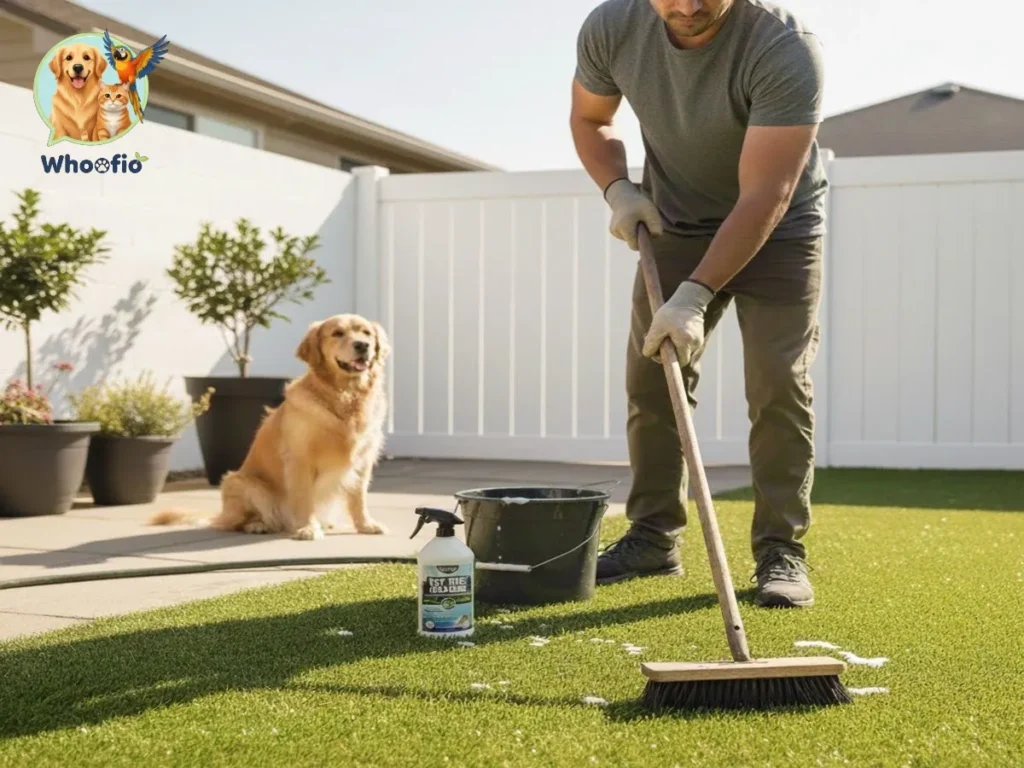
Artificial pet turf is the best solution for pet owners who want a clean, green yard all year long without the hassle of mud or dead patches. However, even though it looks perfect and low-maintenance, it still requires proper care to stay fresh and hygienic. When pets use the lawn daily, bacteria, odors, and dirt can accumulate between the blades and drainage layers.
Knowing how to clean pet turf the right way protects both your investment and your pet’s health. Regular cleaning prevents unpleasant smells, keeps the turf fibers strong, and ensures a safe play area for your pets.
In this complete guide, we will explain what pet turf is, why cleaning is essential, how to clean it step by step, what products to use, and how to maintain its natural look and durability for years to come.
What Is Pet Turf?
Pet turf, often called artificial grass for pets, is a specialized type of synthetic grass designed to handle heavy activity, pet waste, and weather exposure. Unlike regular artificial turf, it contains advanced drainage systems and antimicrobial infill that allow urine and water to pass through quickly while controlling odor. The blades are made from non-toxic polyethylene fibers woven into a strong, porous backing that resists tearing and matting.
This type of turf is soft on paws, prevents muddy footprints, and looks lush all year. Beneath the surface, layers of crushed stone or sand support drainage and air circulation to reduce bacterial growth. Pet turf is ideal for homeowners with dogs because it’s easy to clean, durable, and safe.
Why Cleaning Pet Turf Matters
While artificial grass doesn’t require mowing or watering, it’s not maintenance-free. When pets urinate or defecate, organic residues remain within the infill and backing. Over time, these residues mix with bacteria, producing strong ammonia odors and potentially harming your pet’s health.
Cleaning your pet turf regularly helps:
- Eliminate bad odors caused by pet urine.
- Prevent bacterial growth and harmful microorganisms.
- Maintain the appearance of turf blades, keeping them upright and vibrant.
- Extend the turf’s lifespan, preventing fiber breakdown or discoloration.
- Ensure pet health and hygiene, especially for households with multiple pets.
According to landscape maintenance experts, pet turf that is cleaned properly can last 10–15 years without losing quality. So, learning how to clean pet turf isn’t just about cleanliness — it’s about protecting your home environment and your pets’ safety.
Understanding What Causes Turf Odor
The main cause of unpleasant smell on pet turf is the ammonia in pet urine. When urine seeps into the turf and is not washed away quickly, it reacts with oxygen and moisture, producing ammonia gas. This gas creates the strong “pet smell” most owners notice after a few days.
Humidity, limited airflow, and lack of cleaning worsen the problem, especially in warm weather. Solid waste also contributes to bacteria buildup, which multiplies if not removed daily.
To break this odor cycle, cleaning must target both surface debris and underlying bacteria trapped in the drainage layer. That’s why a complete cleaning routine includes rinsing, disinfecting, deodorizing, and brushing.
How Often Should You Clean Pet Turfs?
Cleaning frequency depends on how often pets use the area. Here’s a practical guideline:
| Usage Type | Recommended Cleaning Frequency |
| One small pet (light use) | Rinse twice a week and deep clean monthly |
| Two or more pets (medium use) | Rinse 3–4 times a week and deep clean every 2–3 weeks |
| High traffic areas or multiple dogs | Daily rinse and deep clean weekly |
| Rainy season | Light cleaning, natural rinse from rain helps |
| Hot or dry weather | Increase rinsing to avoid odor buildup |
Regular maintenance prevents waste from soaking deep into the infill, which makes later cleaning easier and faster.
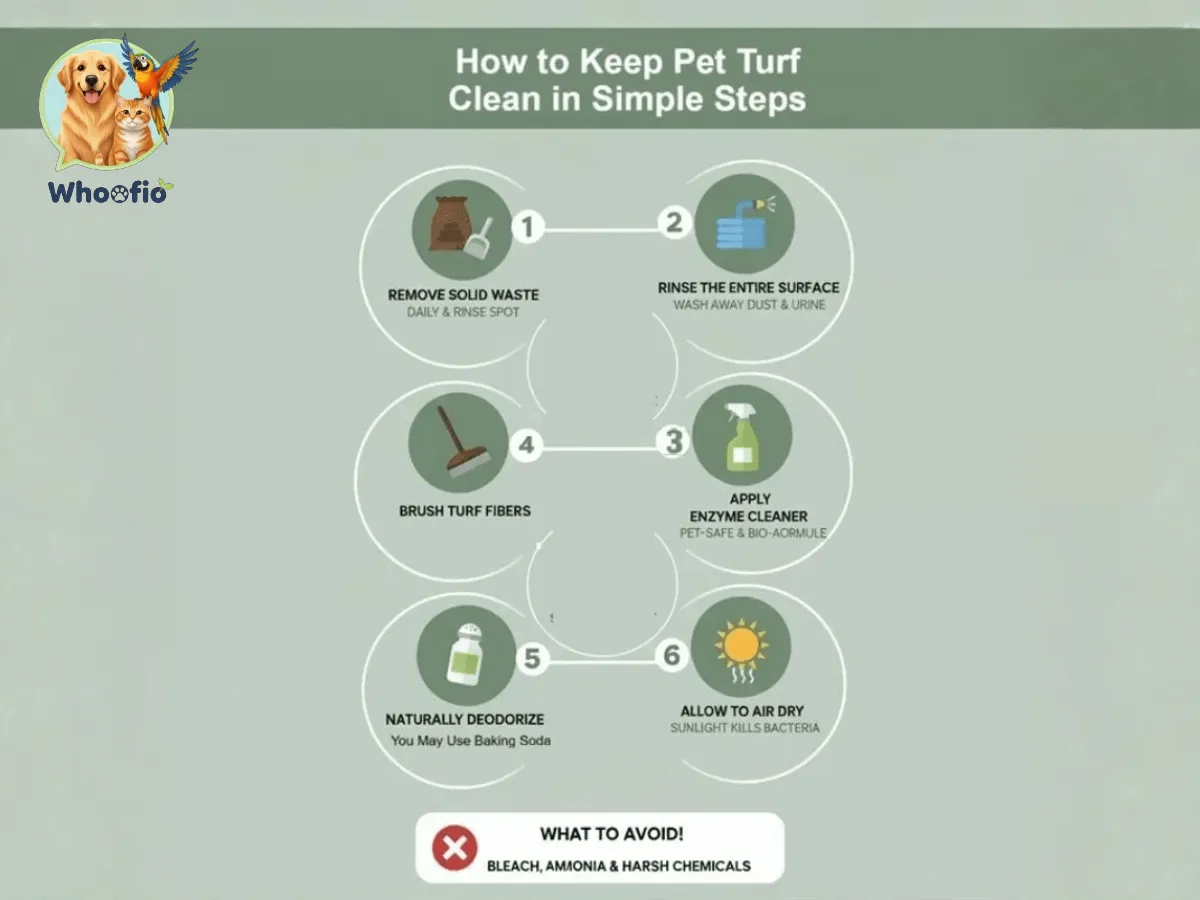
How to Clean Pet Turf Properly: Step-by-Step Guide
Keeping your pet turf clean is very important if you want a yard that looks nice, smells good, and stays safe for your pets. With a few simple cleaning steps, you can easily remove dirt, waste, and odor, keeping your lawn looking green all year round.
Step 1: Remove Solid Waste
Start by cleaning up any solid waste from your pets every day. Use a scooper, gloves, or a plastic bag to pick it up. Try not to press it into the grass, as it can stick to the turf blades and spread bacteria. Once the waste is removed, rinse that area with clean water.
Daily cleaning stops bad smells from forming and keeps harmful germs away. If waste stays for too long, it can break down and make the turf smell like ammonia. Cleaning right away keeps your turf fresh and your pets healthy.
Step 2: Rinse the Turf
After removing the waste, it’s time to rinse the turf. Use a garden hose with a spray nozzle for this step. Gently spray water over the entire area, focusing more on spots where your pets usually pee or play.
Rinsing helps remove urine, dust, and small dirt particles that may settle between the grass blades. It also helps prevent odor and keeps the drainage system working properly. Doing this once or twice a week is enough for most homes, but if you have many pets, you can rinse more often.
Step 3: Use a Pet-Safe Enzyme Cleaner
This is an important step to keep your turf clean and odor-free. Spray a pet-safe enzyme cleaner over the turf, especially on spots that smell or are used frequently. These cleaners use natural ingredients to break down pet urine and waste.
Let the cleaner sit for about 10–15 minutes so it can reach deep into the turf fibers. After that, rinse it off with clean water. Choose cleaners made from natural or bio-based materials — they are safe for pets, kids, and the environment. Regular use of enzyme cleaners helps prevent long-term odor problems.
Step 4: Brush the Turf
Once your turf is clean and rinsed, it’s time to brush it. Use a stiff-bristled turf brush or broom to lift the grass blades. Always brush against the grain — the opposite direction the grass naturally leans.
Brushing makes the turf look new again and stops the grass from becoming flat. It also spreads the small infill pieces (like sand or rubber) evenly, which helps the turf stay soft and drain water properly. Brushing once every week or two keeps your turf looking full and natural.
Step 5: Deodorize the Surface
If your turf still has a light odor, you can deodorize it naturally. The easiest way is to sprinkle baking soda evenly over the surface. Baking soda helps absorb smells and keeps the area fresh. You can also use a pet-safe turf deodorizer from the store.
Leave the deodorizer on the turf for about 10–15 minutes, then lightly rinse it away with water. This removes any leftover smell and gives your turf a clean scent. Doing this once a week helps keep your yard smelling pleasant, even after heavy use.
Step 6: Let It Dry Naturally
The final step is to let your turf air dry completely. Allow the sunlight and fresh air to do their job. Sunlight naturally kills bacteria and prevents mold or mildew from growing under the turf.
Avoid using hot air dryers or heaters, as they can damage the turf fibers and shorten its life. Make sure the turf is fully dry before letting your pets play again. Proper drying keeps your turf clean, safe, and long-lasting.
DIY Cleaning vs. Professional Cleaning
| Aspect | DIY Cleaning | Professional Cleaning |
| Cost | Low (mainly cleaning supplies) | Moderate to high, depending on service area |
| Time Required | Regular weekly effort | Done quarterly or semi-annually |
| Depth of Cleaning | Surface level, good for maintenance | Deep extraction cleaning with pressure and disinfection |
| Tools Needed | Hose, brush, enzyme cleaner | Commercial turf vacuum, power rinse, steam or sanitizer |
| Ideal For | Homeowners with 1–2 pets | Large yards, kennels, or high-traffic pet areas |
Professionals use turf-specific disinfectants, power washers, and steam equipment to reach deeper layers. A combination of regular DIY cleaning and occasional professional service offers the best long-term result.
Choosing the Right Cleaning Products
Not all cleaning agents are safe for artificial turf. Avoid bleach, harsh detergents, or products with alcohol because they can weaken fibers or discolor the surface. Instead, look for:
- Enzyme-based cleaners: Biologically break down pet urine and organic waste.
- Bio-enzymatic sprays: Designed for pet turf; eco-friendly and non-toxic.
- Vinegar solution (1:1 with water): Natural deodorizer that neutralizes ammonia.
- Zeolite infill refreshers: Absorb odors and moisture effectively.
- Turf deodorizers: Specifically labeled for synthetic grass or pet turf systems.
Always check manufacturer recommendations to ensure compatibility with your specific turf brand.
Natural and Eco-Friendly Cleaning Options
Many pet owners prefer green cleaning methods that are safe for both pets and the environment. Here are some effective eco-friendly choices:
- White Vinegar and Water Mixture – Mix equal parts vinegar and water in a spray bottle. Spray over odor spots and rinse after 10 minutes.
- Baking Soda Powder – Sprinkle over turf, wait 15 minutes, then hose off to absorb lingering smells.
- Lemon-infused Water – A natural mild acid that cuts odor and leaves a fresh scent.
- Essential Oil Sprays – Add a few drops of lavender or tea tree oil to water for natural deodorizing.
These options are safe, inexpensive, and perfect for maintaining your turf between deep cleans.
Common Mistakes to Avoid When Cleaning Pet Turf
- Using bleach or ammonia-based cleaners: They can damage the turf backing and irritate pets’ paws.
- Neglecting regular rinsing: Waiting too long allows urine to crystallize, making odor removal difficult.
- Skipping brushing: Flattened fibers reduce drainage efficiency and trap dirt.
- Over-saturating the turf: Excessive water can flood the base layer, leading to bacteria buildup.
- Not checking drainage: Blocked drainage holes prevent proper flow, causing stagnant odors.
By avoiding these mistakes, you can preserve both the look and hygiene of your artificial pet turf.
How to Deep Clean Pet Turf (Monthly Routine)
A deep clean involves a more thorough process than regular rinsing. Here’s how to perform it correctly:
- Clear Debris: Remove leaves, waste, and dirt using a leaf blower or rake.
- Rinse the Entire Surface: Start from one end and move evenly to wash away surface particles.
- Apply Enzyme Cleaner: Use a turf sprayer for even coverage. Focus on areas pets use most.
- Agitate the Turf: Use a stiff brush or broom to work the solution deep into the infill.
- Rinse Again: Flush the turf thoroughly to remove loosened waste.
- Disinfect (Optional): Apply a diluted vinegar or pet-safe disinfectant solution.
- Brush and Dry: Finish by brushing the blades upright and letting them air dry fully.
Deep cleaning once or twice a month keeps your yard fresh, odor-free, and hygienic.
Maintaining the Turf Between Cleans
Between scheduled cleanings, a few habits can help preserve your turf’s freshness:
- Rinse urine spots promptly to stop odor buildup.
- Pick up solid waste immediately and rinse afterward.
- Brush the turf weekly to keep blades upright.
- Use infill refreshers like zeolite granules to absorb moisture.
- Check drainage regularly to prevent clogs.
- Keep nearby plants trimmed to reduce debris on the surface.
Following these simple maintenance habits ensures that cleaning stays easy and your turf looks like new every day.
Seasonal Turf Care Tips
Spring and Summer
Warmer months encourage bacteria growth. Increase rinsing frequency, and consider using enzyme sprays twice a week. Ensure proper drainage to prevent odor buildup.
Fall
Leaves and pollen can accumulate. Use a blower to remove debris regularly and perform one deep clean before winter.
Winter
Cold weather naturally slows bacterial activity. Reduce cleaning frequency but inspect drainage systems after heavy rain or snow.
Seasonal care not only prevents long-term damage but also helps maintain a consistent appearance throughout the year.
Conclusion and Call-to-Action
Cleaning and maintaining pet turf is simpler than it may seem. With a regular routine and the right products, you can keep your synthetic lawn looking beautiful and safe for years.
Knowing how to clean pet turf properly helps control odor, preserve color, and protect your pets from bacteria or allergens. The key is consistency — rinse often, deep clean monthly, and use pet-friendly enzyme products.
A clean turf not only improves hygiene but also enhances your home’s appearance.
Start your cleaning routine today and enjoy a fresh, odor-free yard your pets will love. For more expert guides on pet care and maintenance, explore other detailed articles on whoofio.com.
Frequently Asked Questions About How to Clean Pet Turf
Q1. Can I use a pressure washer on pet turf?
Yes, but use it cautiously. A low-pressure setting (under 1,200 PSI) is safe. Avoid focusing too closely on seams or edges.
Q2. What’s the best cleaner for dog urine on turf?
A bio-enzyme cleaner specifically designed for artificial grass is most effective at breaking down urine compounds and odors.
Q3. Does rain clean pet turf naturally?
Rain helps rinse the surface, but it doesn’t remove bacteria or urine residue. You should still use an enzyme cleaner periodically.
Q4. How can I make turf smell fresh longer?
Use zeolite infill or baking soda to absorb ammonia odors and spray a pet-safe deodorizer weekly.
Q5. Can pet turf melt in sunlight?
High-quality turf is UV-resistant and won’t melt under normal conditions. Avoid placing reflective glass surfaces nearby that can intensify heat.