
If you are thinking about getting a Senegal parrot or already have one, it’s natural to wonder, how long does a Senegal parrot live? These bright, playful birds are known for their intelligence and charm. They can form deep bonds with their owners and become a big part of the family. But like any pet, their lifespan depends on how well they are cared for.
A Senegal parrot’s life can be long and full of joy if they are given the right food, space, attention, and health care. In this article, we’ll explore how long Senegal parrots live, what affects their lifespan, and what you can do to help your parrot live a happy, healthy, and long life.
Understanding the Senegal Parrot
The Senegal parrot (Poicephalus senegalus) comes from the forests and savannas of West Africa. These birds are small to medium in size, about 9 inches long, with a wingspan of around 6 inches. They usually weigh between 120 and 170 grams.
They have striking colours — a grey head, green wings, and a yellow or orange “vest” on their chest. Males and females look very similar, and it’s often hard to tell them apart without a DNA test. Senegal parrots are known for being calm, affectionate, and sometimes a little shy. They can mimic sounds and even learn to say a few words, but they are generally quieter than many other parrot species, which makes them great for apartment living.
How Long Does a Senegal Parrot Live?
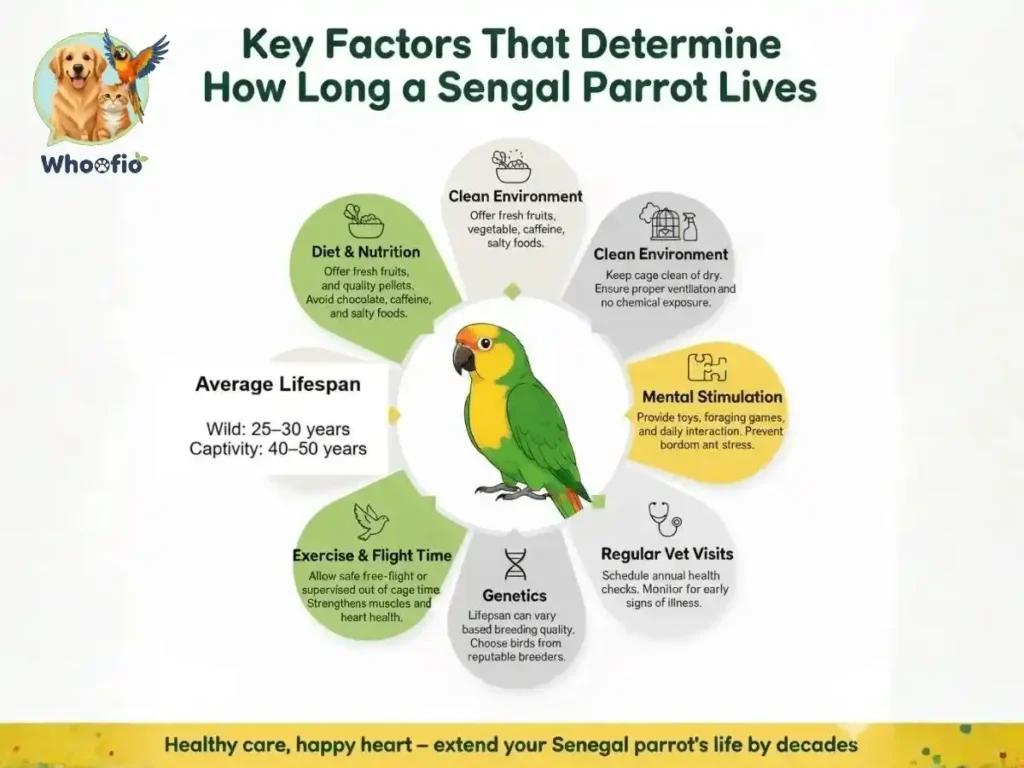
The lifespan of a Senegal parrot depends on many factors, such as diet, environment, and health care. On average, Senegal parrots live about 25 to 30 years in the wild. However, in captivity, where they receive good food, protection, and love, they can live up to 40 or even 50 years.
Many owners report their parrots living into their late 30s or early 40s. The key difference between wild and captive lifespans comes down to safety and care. In the wild, predators, harsh weather, and disease can shorten their lives. But at home, with consistent care, Senegal parrots can thrive for decades.
So, when you bring home a Senegal parrot, you are not just getting a short-term pet — you are making a long-term commitment. These birds can live long enough to grow up with your children or even outlive some family pets.
Lifespan in Captivity vs. the Wild
In the Wild:
Wild Senegal parrots usually live around 20 to 25 years. Their shorter lifespan is due to natural dangers like predators, limited food, and changing weather conditions. They must find food and avoid threats daily, which takes a toll on their health and longevity.
In Captivity:
When cared for properly, Senegal parrots can live between 30 and 50 years. Some exceptional cases have been recorded where pet Senegal parrots lived over 50 years. Captivity provides them with steady food, safety, medical care, and love, which adds many healthy years to their lives.
What Affects a Senegal Parrot’s Lifespan?
There are several things that can affect how long a Senegal parrot lives. These include diet, exercise, mental health, medical care, and even genetics. Let’s look at each factor in detail.
1. Diet and Nutrition
Food plays a huge role in your parrot’s health and lifespan. Many experts say that up to 90% of pet bird health problems come from poor nutrition.
Senegal parrots should eat a balanced diet of:
- High-quality pellets (65–80% of their daily food)
- Fresh vegetables (15–25%)
- Fruits and nuts (5–10%, as treats only)
Some of the best foods for Senegal parrots include carrots, broccoli, peas, sweet potatoes, pumpkin, apples, and pomegranate. Avoid feeding avocados, chocolate, onions, and caffeine — these can be toxic.
A varied and nutritious diet helps prevent vitamin deficiencies, obesity, and other health problems that can shorten your bird’s life.
2. Living Conditions
The environment where your parrot lives has a strong effect on its health. Senegal parrots need a spacious cage that allows them to stretch and flap their wings freely. The recommended size is at least 36 inches long, 30 inches wide, and 30 inches high.
Cleanliness is also vital. The cage should be cleaned at least twice a week, with food and water bowls washed daily. Avoid exposing your bird to smoke, strong perfumes, or sudden temperature changes, as these can cause breathing problems.
A quiet, safe, and stable home environment helps reduce stress — and stress is one of the biggest silent killers of parrots.
3. Health Care and Vet Visits
Just like humans, parrots need regular health checkups. You should take your Senegal parrot to an avian veterinarian at least once a year. Regular exams can catch early signs of illness that might otherwise go unnoticed.
Some common health problems in Senegal parrots include:
- Vitamin A deficiency
- Respiratory infections
- Feather plucking (often caused by stress or boredom)
- Fatty liver disease
- Calcium deficiency
With proper medical attention and preventive care, these problems can be avoided or treated early, allowing your parrot to live a longer, healthier life.
4. Mental Stimulation and Social Interaction
Senegal parrots are intelligent and social birds. They get bored easily, and boredom can lead to destructive behavior or depression. A mentally unhappy bird often becomes sick over time.
To keep your Senegal parrot mentally active:
- Provide toys that challenge them (puzzle toys, hanging ropes, bells).
- Allow daily out-of-cage time for play and exploration.
- Talk to them and interact regularly.
- Teach them simple tricks or commands to keep their minds engaged.
A happy and mentally stimulated parrot will eat better, sleep better, and live longer.
5. Genetics and Environment
Some parrots may have genetic health issues that affect lifespan. While you can’t change genetics, you can reduce risks through proper care and nutrition. Birds from reputable breeders are often healthier and live longer because they come from well-monitored bloodlines.
The environment also matters — parrots living in noisy or stressful homes, or around smoking and poor air quality, tend to live shorter lives. Peace, routine, and emotional connection all contribute to a longer lifespan.
How to Help Your Senegal Parrot Live Longer
If you want your parrot to live a long and healthy life, it’s all about consistency. Here are the most effective ways to help your bird stay happy and live for decades.
1. Feed a Healthy Diet
Keep the diet rich in pellets, fresh vegetables, and a few fruits. Avoid giving too many seeds, as they are high in fat and can cause liver issues. Add calcium supplements if advised by your vet, especially for egg-laying females.
2. Provide Proper Lighting and Temperature
Parrots need sunlight or UV lighting to produce vitamin D3, which helps them absorb calcium. Without enough light, they can suffer from weak bones and poor health. Keep the cage in a well-lit room with a temperature between 65°F and 80°F (18°C to 27°C).
3. Keep the Cage Clean
A dirty cage attracts bacteria and parasites. Change the bottom lining frequently and disinfect the cage once or twice a week using bird-safe cleaning products.
4. Avoid Loneliness
Senegal parrots form strong bonds with their humans. They do not like being ignored or left alone for long hours. Spend time talking, playing, and gently handling them daily. A lonely parrot often becomes depressed, which can reduce lifespan.
5. Encourage Exercise
Let your parrot out of the cage daily in a safe room to fly and stretch. Flying is excellent exercise for their heart and muscles. Climbing toys, ladders, and ropes can also help them stay active.
Signs of Ageing in Senegal Parrots
As Senegal parrots age, you may notice a few changes. Their feathers may lose some shine, and they might become less active or playful. Appetite can also slow down a bit.
Older parrots might sleep more or prefer quiet time. You can help them by offering softer foods, easy perches, and gentle grooming. Regular vet visits become even more important in later years to catch age-related issues early.
Common Health Issues That Shorten Lifespan
Here are some of the most common health problems that can shorten a Senegal parrot’s life if not managed properly:
- Obesity: Often caused by too many seeds or nuts.
- Feather plucking: A sign of stress, boredom, or poor diet.
- Vitamin A deficiency: Causes breathing issues and weak immunity.
- Calcium deficiency: Leads to weak bones and egg-binding in females.
- Respiratory infections: Often due to poor hygiene or air quality.
By keeping an eye out for symptoms like loss of appetite, sitting fluffed up, or breathing problems, you can act quickly and seek veterinary help before the condition worsens.
Senegal Parrot Lifespan vs Other Parrot Species
| Parrot Species | Average Lifespan (Captivity) | Size | Personality |
| Senegal Parrot | 25–35 years | Small | Calm, intelligent |
| African Grey | 40–60 years | Medium | Highly intelligent, talkative |
| Budgerigar (Budgie) | 10–15 years | Small | Playful, social |
| Cockatiel | 15–20 years | Small | Friendly, gentle |
| Macaw | 50–80 years | Large | Loud, affectionate |
Expert Tips and Real Experiences
Bird experts and long-time parrot owners agree on one thing: routine and care equal longevity. Senegal parrots thrive in consistent, calm environments. Many owners who have kept their birds for 30+ years say the secret is simple: healthy food, clean space, and lots of love.
One owner shared, “My Senegal, Toby, turned 42 this year. He’s been with me since college. I believe the reason he’s lived so long is that he’s never felt lonely. He eats his veggies, gets out every day, and is part of the family.”
Final Thoughts
So, how long does a Senegal parrot live?
In the wild, they usually live around 25 years, but with the right care in captivity, they can live 40 to 50 years or more. The key is proper diet, clean living, mental stimulation, and love.
Owning a Senegal parrot means making a long-term promise. These beautiful, intelligent birds can fill your home with laughter and warmth for decades. When you take good care of your parrot, you’re not just adding years to their life — you’re adding life to their years.